
August 16, 2026

Order a whiskey sour at a bar you have never been to, and you will learn something about the place before the first sip even happens. Whiskey. Lemon. Sugar. Maybe an egg white, if the bartender is willing to do the extra shake for it. Three or four ingredients, and nowhere at all to hide a mistake. Ask enough bartenders which drink actually separates real technique from someone reciting a recipe card, and this is usually the one they name first.
The sour family of cocktails, spirit plus citrus plus sweetener, dates back to the mid-1800s, with the whiskey version showing up in American newspapers and bar guides as early as the 1870s. It has outlasted trends that came and went twice over, largely because the format itself never really needed updating. Other drinks from the same era got buried under decades of bad execution and eventually needed a full revival to earn back their reputation. The whiskey sour mostly avoided that fate, though not because it was immune to bad bartending. It survived because when it is made correctly, there is nothing else quite like it, and enough bars kept making it correctly to keep the memory alive.
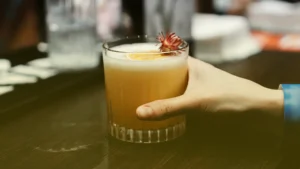
Part of what makes the whiskey sour such a useful test is how little there is to work with. Complicated cocktails can survive a small mistake because five or six ingredients are competing for attention, and a slightly off measurement gets lost in the noise. A whiskey sour has nowhere to hide. Too much lemon and the whiskey disappears. Too much sugar and it turns into candy. Under-shaken, and it separates instead of coming together into something with real texture. Every step is visible in the final glass, which is exactly why it has stuck around as a benchmark drink for well over a century.
National Whiskey Sour Day, marked every August 25th, gives bars a reason to put that history back in front of guests who might only think of the drink as something their parents used to order. The date itself is a small thing, but it tends to start conversations at the bar that would not otherwise happen, mostly because people are surprised at how differently the same three ingredients can taste depending on who is behind the shaker.
Watching someone build a whiskey sour properly is a decent crash course in what craft bartending actually involves, as opposed to what it looks like from across a crowded room. It starts with juice. Bottled lemon juice, even a good one, has a flatness that fresh juice does not, and the difference shows up almost immediately once whiskey enters the picture. Sugar matters too. A simple syrup made in-house behaves differently in a shaker than granulated sugar dropped straight into the glass, dissolving evenly instead of settling at the bottom where it does nothing for the drink above it.
Then there is the shake itself, where most of the actual skill lives. A whiskey sour gets a hard, sustained shake rather than the quick few seconds some drinks call for, because the goal is full integration of citrus, sugar, and spirit into something with a slightly thickened texture, not three separate liquids sharing a glass out of convenience. Bartenders who rush this step end up with a drink that tastes correct on paper but wrong in the mouth, thin exactly where it should feel rounded and full.
No detail about the whiskey sour generates more disagreement than the egg white foam on top, and it deserves an actual explanation rather than an assumption. The egg white itself adds almost no flavor. What it adds is texture, a silky layer that sits across the top of the drink and softens the sharper edges of the lemon underneath it. Getting that foam right requires a dry shake first, meaning the ingredients get shaken without ice to fully whip the egg white, followed by a second shake with ice to bring the temperature down properly. Skip the dry shake and the foam comes out thin and uneven. Skip the egg white entirely and it is still a whiskey sour, just a sharper, slightly more direct version of one.
Some guests ask for it without the egg white purely out of habit or hesitation, which is a completely reasonable choice either way. Others order it specifically for the texture without realizing at first that it barely changes the taste underneath. The choice itself says something about how carefully a bar handles a drink that most people assume is far simpler than it actually is.
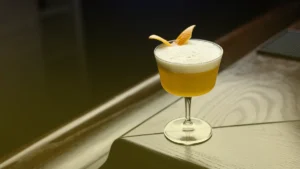
Once the basic whiskey sour clicks, a couple of close relatives are worth trying for anyone curious about where the format can go. A New York sour takes the same base and adds a small float of dry red wine across the top, poured gently over the back of a spoon so it sits as a separate layer rather than mixing in completely. The wine adds a slightly tannic, fruity edge that changes the finish of the drink without altering anything underneath it. A Boston sour leans further into the egg white side of things, sometimes finished with a few drops of aromatic bitters across the foam purely for visual contrast and a faint extra layer of spice on the nose. Neither variation is better than the original, but both make the case that a three-ingredient format can still leave room for a bartender to put a personal signature on the glass.
Ask most bartenders what they order on a night off, somewhere other than their own bar, and a surprising number will name a whiskey sour before anything more elaborate on the menu in front of them. Part of that comes down to professional curiosity. A bar’s whiskey sour tends to reveal more about the overall quality of its bar program than a flashier, more expensive cocktail ever could, precisely because there is nowhere for a rushed bartender to hide behind garnish or presentation.
Mixology as a discipline has spent the last two decades chasing complexity, adding house-made bitters, elaborate ice programs, and increasingly obscure spirits to menus across the country. That trend has produced genuinely interesting drinks, but it has also made it easy to forget the fundamentals still matter more than any of the extras layered on top of them. A whiskey sour, made with real attention to juice, sugar, shake, and texture, is a reminder of that fact every single time it gets poured the right way.
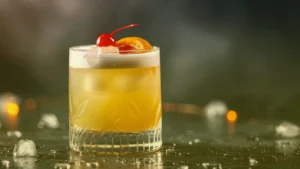
There is no wrong way to enjoy a whiskey sour, but there is a smarter way to order one if the goal is finding out what a bar’s bartenders can actually do. Ask for it with fresh lemon and, if the option exists, with the egg white foam included. Watch how long the shake lasts before it hits the glass, since a rushed pour will taste thin no matter how good the whiskey underneath it happens to be. A properly built one tastes balanced from the first sip through the last, with the whiskey still clearly recognizable underneath the citrus rather than drowned out by it entirely.
August 25th is as good an excuse as any to find out which kind of whiskey sour a favorite bar actually makes when nobody is rushing the shaker.
Leave a Comment: